About
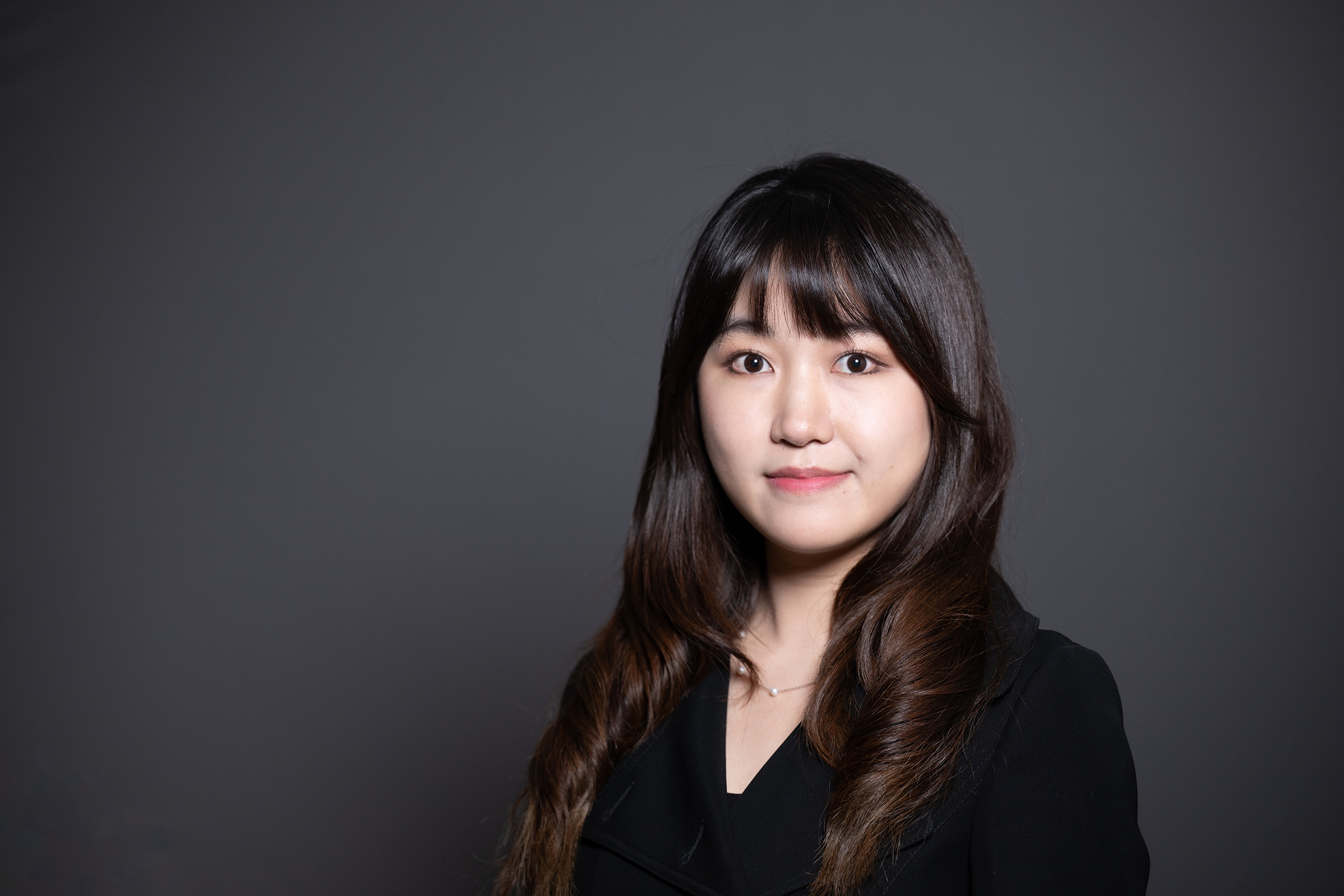
I am a PhD candidate in Information Science at Cornell University, specializing in Human-Computer Interaction. I am advised by Prof. Susan R. Fussell. I received my B.A. in Linguistics from the University of California, Berkeley.
📢 On the academic job market (2026–27). I am seeking postdoctoral and faculty positions starting in 2026 at the intersection of HCI, psycholinguistics, and computational social science. Please feel free to reach out.
My research investigates how people build and maintain shared common ground in conversation when AI mediates their communication. I study AI-Mediated Communication (AI-MC) through the lens of speech processing, interactive alignment, and conversational dynamics — asking how AI systems reshape the cognitive and social mechanisms that speakers rely on to understand each other in real time.
I bridge psycholinguistic theory and HCI systems building: I derive computational metrics of cognitive load and prediction from real-time speech, run rigorous experiments that validate these measures, and translate the findings into deployable AI systems — most notably XPLAIN, a proactive AI scaffold for non-native speakers in online meetings, incubated by the Cornell eLab Student Startup Accelerator.
Research Interests
- AI-Mediated Communication & Speech: How AI interventions in real-time spoken interaction affect comprehension, production, and turn-taking — particularly for non-native speakers navigating cognitive bottlenecks like semantic prediction failure and temporal pressure
- Interactive Alignment & Shared Common Ground: How conversational partners coordinate understanding through linguistic and behavioral cues, and how AI mediation disrupts or supports this alignment process
- Cognitive Fluency & Disfluency: Using speech disfluency patterns, gaze, and multimodal behavioral signals as windows into speakers’ cognitive states during AI-mediated conversation
- User Heterogeneity & Personalization: Identifying individual differences in language proficiency, metacognitive awareness, and working memory via latent class analysis to drive adaptive AI interventions
Methodology
My work spans a wide methodological range, combining approaches from psycholinguistics, NLP, and design:
- Statistical & computational methods: GLMMs, multilevel models, latent class/transition analysis, causal inference, time series prediction
- NLP & LLM-based methods: LLM-approximated next-word prediction for measuring cognitive processing in speech, prompt engineering, AI agent evaluation
- Prototyping & systems building: Wizard-of-Oz concept validation, real-time multimodal evaluation pipelines for naturalistic conversation, web-based experiment platforms, end-to-end product development from research insight to MVP (see XPLAIN)
- Experimental & design methods: Wizard-of-Oz studies, user studies (80+), customer discovery interviews (100+), multimodal behavioral coding, usability testing
- Qualitative methods: Semi-structured interviews, inductive coding, contextual inquiry, focus groups
Ongoing Projects
Five active projects extend the XPLAIN program toward stage-aligned, individually adaptive AI scaffolding: personalization of proactive AI scaffolds, user heterogeneity via latent class analysis, L1- vs. L2-cued translation scaffolds, interactive alignment & semantic integration, and listener perception of AI-assisted speech. See the Projects page for full details, including past research projects.
News
- Apr 2026 — Presented “Disfluency as a Window into Cognitive Mediation” at CHI EA ‘26 in Barcelona.
- Mar 2026 — Paper accepted to CogSci 2026: User Heterogeneity in AI-Mediated Communication: Extending Cognitive Theories via Latent Class Analysis.
- Oct 2025 — Presented “Proactivity in Scaffolding Comprehension and Production in Real-Time Turn-Taking” at CSCW ‘25 in Bergen, Norway.
- Jul 2025 — Presented “Difference in the Cognitive Mechanism of Predictive Processing in Computer-Mediated Communication” at CogSci 2025 in San Francisco.
- Apr 2025 — XPLAIN pitched at the Cornell Silicon Valley: Student Startup Showcase, Autodesk Gallery, San Francisco.
- Jan 2025 — XPLAIN selected for the Cornell eLab Spring 2025 cohort — one of 13 teams (out of 24) advancing from the accelerator to receive a $5,000 prototype-build investment.
- Jan 2025 — Presented “Exploring Content Predictability in Turn-taking” at COLING 2025 in Abu Dhabi.
- Aug 2024 — XPLAIN joined the Cornell eLab student startup accelerator, Cornell’s pre-seed incubator providing mentorship, workshops, and funding to early-stage ventures.
- Jan 2024 — Joined the selected cohort of W.E. Cornell 2023–24, an entrepreneurship & leadership program for women in STEM.
- Aug 2023 — Joined the W.E. Cornell 2023–24 Cohort.
Selected Publications
- He, W. P. & Fussell, S. R. (2026). XPLAIN: A Proactive Scaffold Across Speech Processing Stages—Supporting Non-Native Speakers in Real-Time AI-Mediated Turn-Taking. ACM CUI ‘26. (Under review)
- He, W. P. & Fussell, S. R. (2026). User Heterogeneity in AI-Mediated Communication: Extending Cognitive Theories via Latent Class Analysis. CogSci 2026. (Accepted)
- He, W. P. (2026). Disfluency as a Window into Cognitive Mediation: Psycholinguistic Metrics for Evaluating AI-Integrated Spoken Communication. CHI EA ‘26.
- Matias, J. N., Kamin, J., Al-Kashif, R., He, W. P., Klein, M., & Pennington, E. How Thanking Peers Sustains Volunteer Participation in Public Goods: Parallel Field Experiments in Four Wikipedia Language Communities. PNAS. (Under review)
- He, W. P. & Fussell, S. R. (2025). Proactivity in Scaffolding Comprehension and Production in Real-Time Turn-Taking. CSCW Companion ‘25.
- He, W. P. & Fussell, S. R. (2025). Difference in the Cognitive Mechanism of Predictive Processing in Computer-Mediated Communication. CogSci 2025.
- He, W., MacDonald, C. C., Yoo, Y., Eizayaga, M., Shim, R., Katreczko, L. D., & Fussell, S. R. (2025). Exploring Content Predictability in Turn-taking Through Different Computer-Mediated Communications. COLING 2025.
See the full list on the Publications page or my Google Scholar.